Carbon sequestration and GHG mitigation
July 30, 2026
Tracking Carbon and GHG Dynamics in Wetland Restoration – Joint webinar Horizon ALFAWetlands, RESTORE4Cs, REWET, Society of Wetlands Scientists
Read more

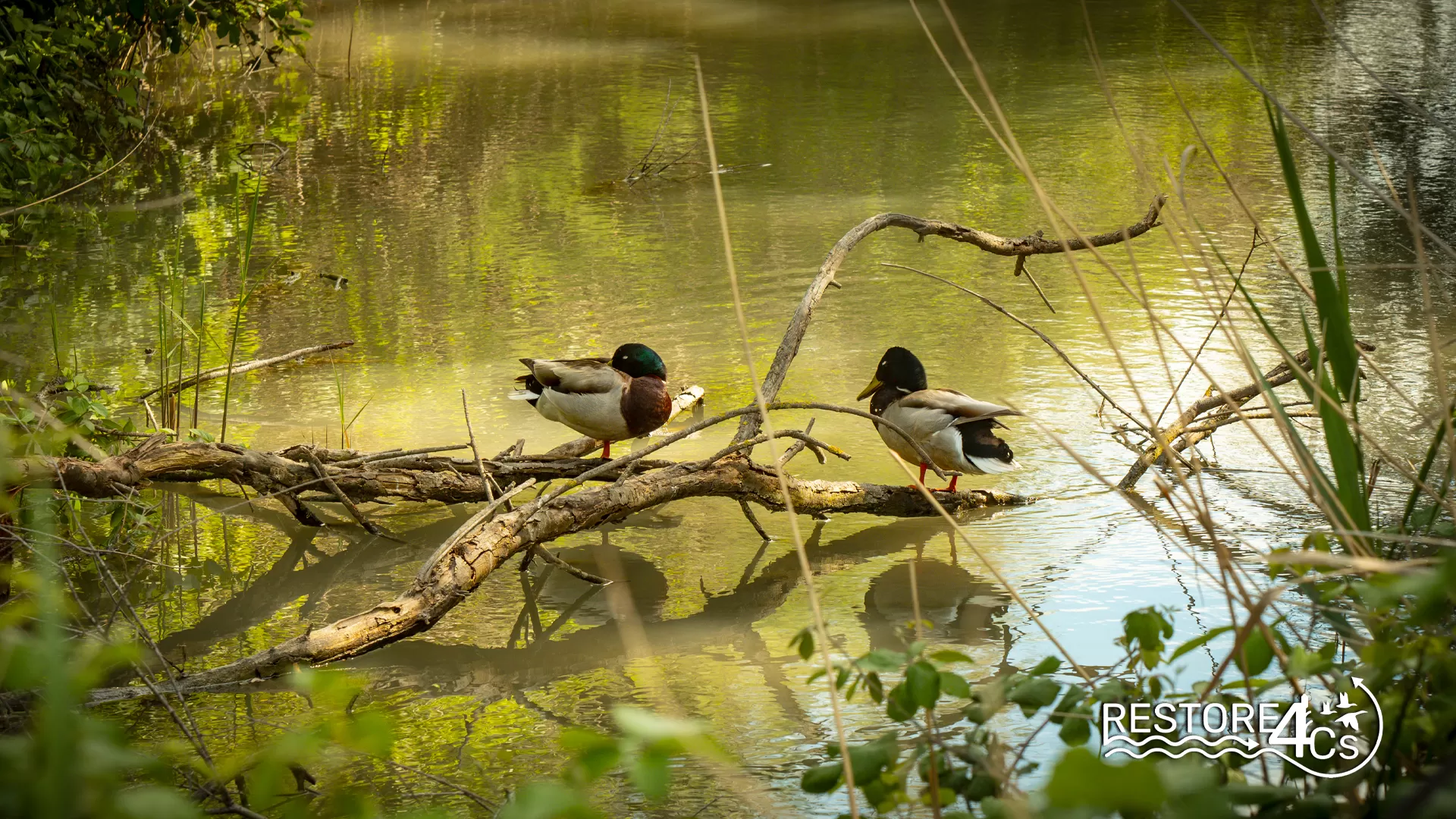
The Camargue Biosphere Reserve, situated in the Rhône River Delta in Southern France is a mosaic of lagoons, freshwater and marine-related habitats, including freshwater and saline ponds, salt marshes, sand dunes, muddy and sandy bottoms, together with grasslands and forests. As one of the most important wetlands in Europe, Camargue boasts high levels of biodiversity, as illustrated by the 356 species and more than 250 waterbirds. Its proximity to the African continent also makes it an important stopover for migratory birds.
The historical context of Camargue wetlands is a tapestry woven from natural processes and human influences. The region is shaped by a dynamic landscape of socio-economic and cultural activities, spanning from agriculture (rice farming, wine production, bull and horse breeding) to hunting, salt harvesting, fishing, reed harvesting and tourism – some of which alter the natural functioning of ecosystems. For instance, wetland management for wildfowl hunting has resulted in the imposition of hydrological conditions as opposed to natural cycles. During the hot season, water is artificially pumped into the system from the Rhone River through a network of irrigation channels to maintain agricultural production.
As a result, most of the coastal natural and human-made wetlands in the Camargue are disconnected from their catchment – a trend which is intensified by a tradition of dyke construction along the coastline which dates from the times of Napoleon. Although this management model hinders natural coastal dynamics, it continues to be favoured by certain societal actors as a strategy to fight rising sea levels. In this context, the activities carried out within the RESTORE4Cs project have promoted the highest possible level of engagement from all sectors in exchanges focusing on the ecological restoration of coastal wetlands with particular focus on the climate benefits.
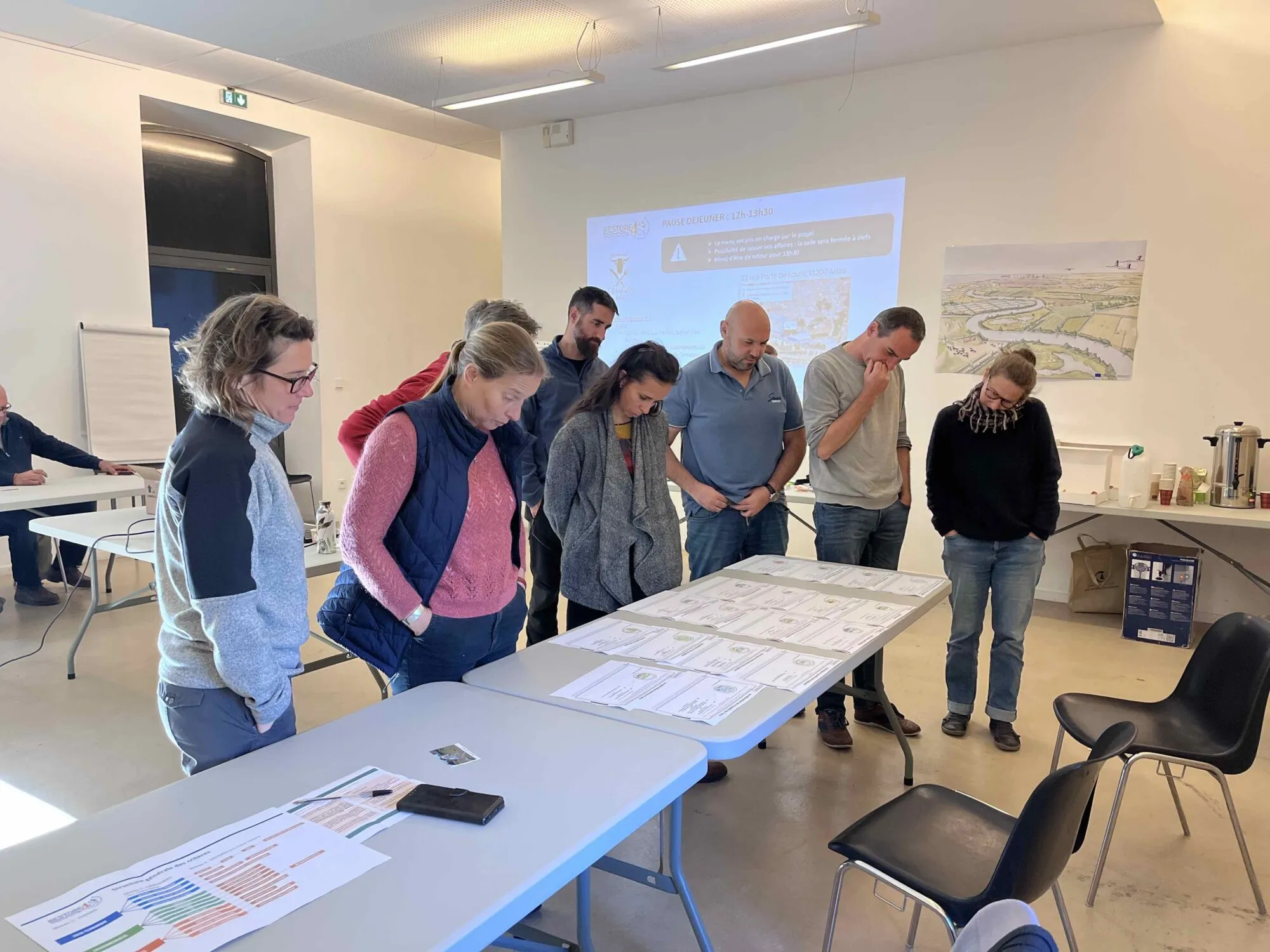
Following a first round of interviews with key stakeholders and based on the collected insights, the case pilot team (Tour du Valat) proposed ‘water sharing’ as the thematic angle of a participatory workshop to discuss various management and restoration solutions. The workshop “L’eau, les écosystèmes et le changement climatique en Camargue”, organised in November 2024 in cooperation with VertigoLab and the Mediterranean Ramsar Initiative ‘MedWet’, gathered a total of 14 representatives from the private sector, government, civil society and academia to discuss pressing challenges, potential solutions and existing good practices in water management which ultimately support the restoration of wetlands. This dialogue incorporated a wide variety of perspectives to ensure an inclusive space of communication, participation and awareness.
Participants identified three top challenges: climate change adaptation, maintenance of infrastructures and water availability. Among the different solutions proposed by the stakeholders, a preference was shown for:
– Rehabilitating and optimising existing infrastructures: the current system can be operational if properly maintained. Gravity channels and pumping stations could be modernised.
– Mapping the needs of the various stakeholders to understand who needs how much water and over what period. This assessment would make it possible to optimise water usage and anticipate changing needs.
– Support the adaptation of practices in each sector of activity in anticipation of future climate hazards.
With regard to good management practices, the following initiatives were highlighted:
– the Delta Contract (Camargue Regional Nature Park)
– MediCyn Project (Grand Port Maritime de Marseille)
– PACTE Camargue Project (CNRS)
– Zone Atelier Santé-Environnement Camargue (CNRS)
– Investment project for the rehabilitation of the hydraulic functionality of the Fumemorte ASA network
– Projet de décorsetage du petit Rhône (SYMADREM)
– Salt roadmap (Camargue Regional Nature Park)
– Innovative management approaches in rice cultivation, salt harvesting and hunting
– Étangs et Marais des Salins de Camargue (EMSC)
– Resist Project (Tour du Valat) – Domaine du Petit Badon
– Plan for safeguarding the Vacarès (SNPN)
– Participatory management of Marais du Verdier (Tour du Valat)
– the Horizon Europe projects WaterLand and RestCoast
Moreover, stakeholder preferences regarding wetland restoration were collected through the application of Multi-Criteria Analysis. The results of this analysis suggests that activities from the primary and tertiary sectors, as well as risk management costs and biodiversity may play a strong role in decision-making for this site. According to the study run by VertigoLab, issues related to agriculture, livestock farming, tourism, nature conservation activities, flood risk mitigation costs, and the richness and abundance of biodiversity were perceived by stakeholders as important parameters to be integrated in restoration decisions and scenarios.
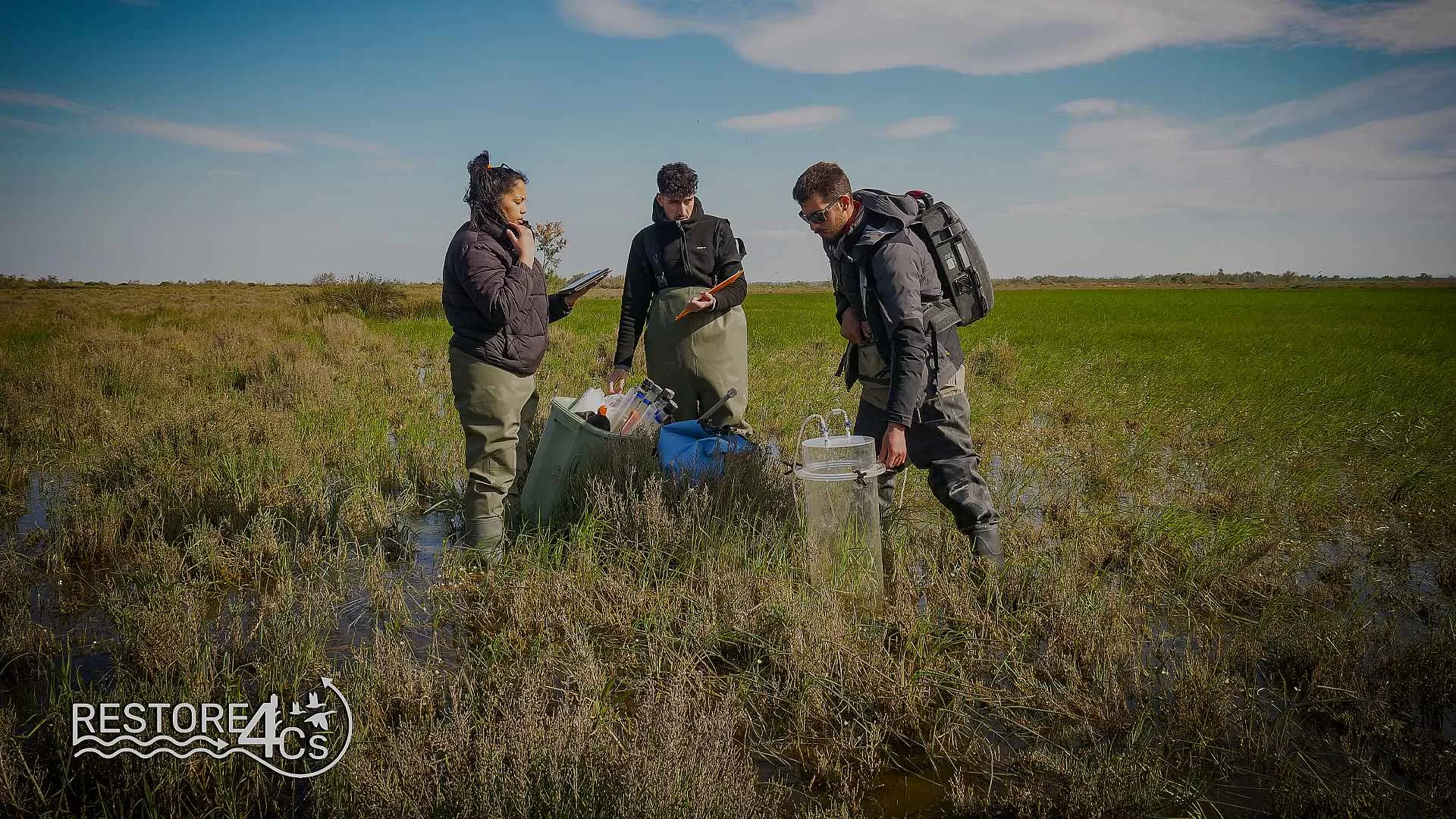
In December 2025, a follow-up webinar made it possible to present these and further results to 11 stakeholders, including the establishment of a new Community of Practice and a decision-support tool to guide restoration efforts in coastal wetlands, which sparked suggestions of new sites to be potentially restored. From the range of results offered by RESTORE4Cs, the Camargue stakeholders showed special interest in the assessment of wetlands potential to mitigate climate change.
For Camargue, the study showed that whilst the restoration of freshwater wetlands does not lead to a significant increase in carbon sequestration rates, it prevents high emissions of methane (CH₄) – a greenhouse gas with a significantly higher global warming potential than carbon dioxide in the medium term, therefore representing a feasible strategy for climate mitigation.
© Photos and video-documentary by LifeWatch ERIC/ Università del Salento
July 30, 2026
Read more
July 30, 2026
Read more