News

February 13, 2026
Strengthening multi-level governance in the Curonian Lagoon to promote wetland restoration
Read more

Wetland conservation and restoration are acknowledged by the 6th IPCC Assessment Report as valid pathways for increasing carbon removals and achieving net zero CO2 and greenhouse gas emissions globally. These strategies encompass the restoration of coastal wetlands and peatlands, but also the management of coastal blue carbon ecosystems, as well as soil carbon sequestration in grasslands. International and regional frameworks, such as the Paris Agreement, the European LULUCF Regulation and, most recently, the EU Carbon Removals and Carbon Farming Regulation promote the quantification of these removals by requesting governments to report on their contributions towards climate mitigation targets.
The Community of Practice for Restoring Wetlands, coordinated by MedWet, contributes to strengthening these mechanisms through its Working Group on Wetland Restoration for Carbon Sequestration & GHG Mitigation, created as part of the Horizon RESTORE4Cs project and led by University of Valencia. By studying and quantifying the effects of ecological restoration on different types of wetlands, this Working Group aims to build comparative evidence on their potential to mitigate climate change while providing multiple benefits to people and nature.
Fostering a practical exchange between wetland scientists on restoration for climate mitigation
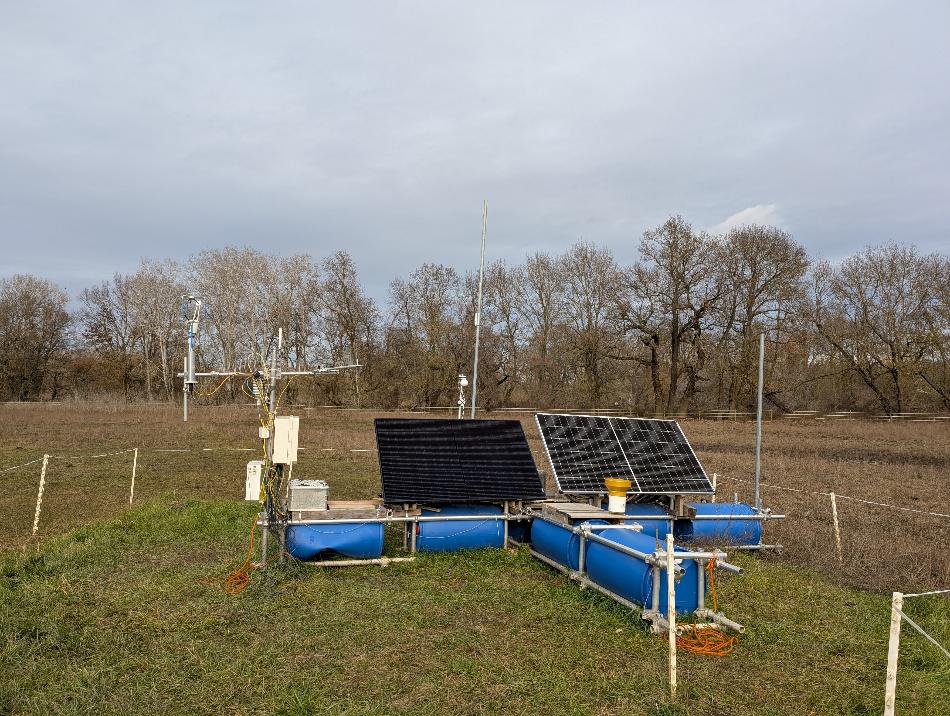
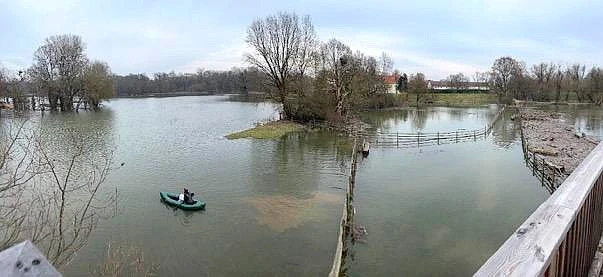
Following a first workshop dedicated to coastal wetlands, the community organised a third session focussing on the role of restored floodplain grasslands as carbon sinks. During this online webinar, the team of the Horizon REWET project shared findings from various studies performed in the floodplain grasslands of the Morava River (Marchegg, Austria) by BOKU University Vienna, where carbon and methane outputs were measured.
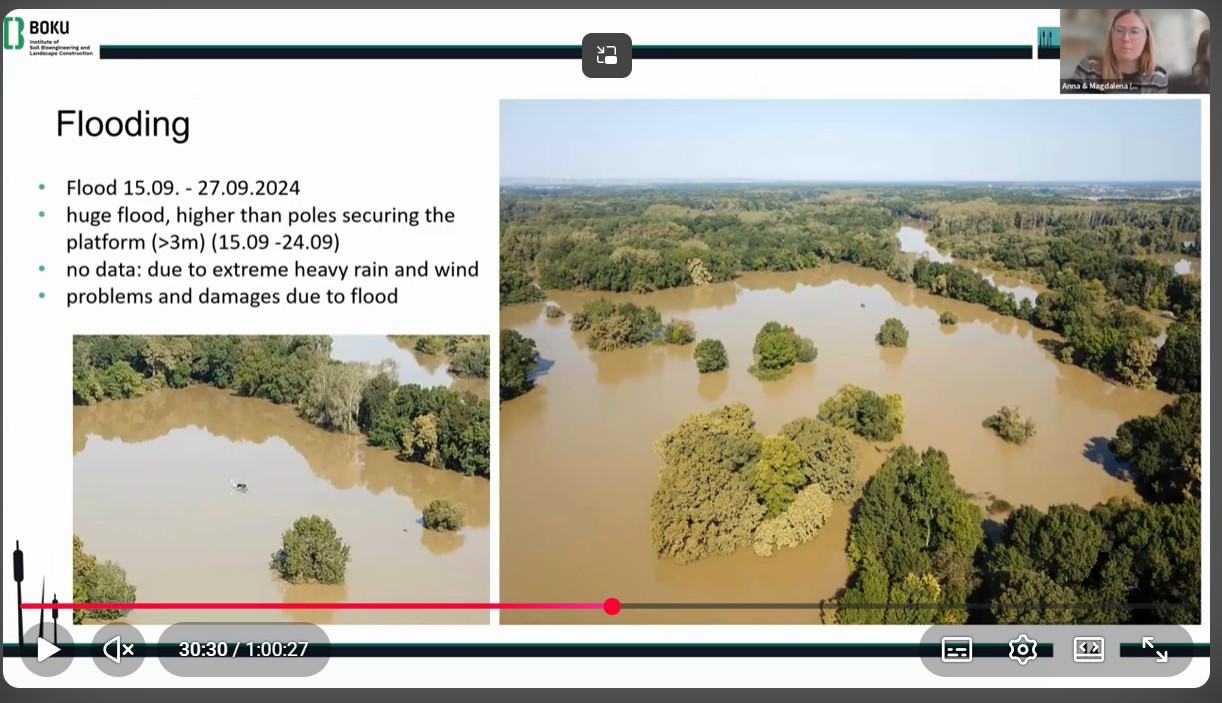
The study carried out by BOKU University has shown – for the Marchegg site – a significant impact from flood events on the levels of CO₂ stored and methane released by the floodplain grasslands. As stressed by Anna Lindenberger and Magdalena von der Thannen from BOKU University, carbon fluxes in this case study have shown to be strongly influenced by hydrological conditions and by the management of the grasslands.
Moreover, an active discussion between experts highlighted the added value of combining techniques such as Eddy covariance and chamber measurements to monitor carbon fluxes, and the need to define a unit for measuring the climate mitigation benefit from restoration (such as Global Warming Potential), in addition to monitoring carbon fluxes at different time scales (after 100 years, every 20 years, etc).
During this session, the Working Group benefited from the presence of representatives from the new Danube WildIslands Ramsar Initiative, Wetlands International, the municipality of Figueira da Foz Municipality in Portugal, the Donau-Auen National Park, as well as the universities of Bucharest (Romania), Klaipeda (Lithuania), Barcelona, Valencia, Malaga (Spain), and Wassercluster Lunz (Austria) and Idener (Spain).
The roadmap of the Community of Practice for Restoring Wetlands
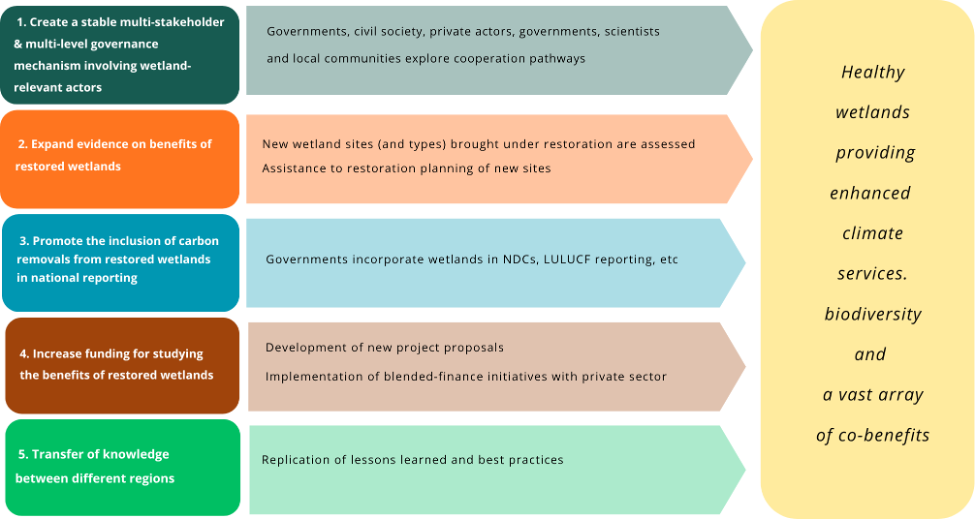
For further details about the Community of Practice, please visit https://www.wetlandbasedsolutions.org/community-of-practice-wetlands/
References
6th IPCC Assessment Report:
Sixth Assessment Report — IPCC
Studies led by BOKU University in Marchegg, Austria:
Impact of various flood conditions on the CO2 ecosystem exchange as a component of floodplain grassland restoration – ScienceDirect
Contrasting carbon dynamics in grazed and flood-prone grasslands on mineral and degraded peat soils – ScienceDirect
